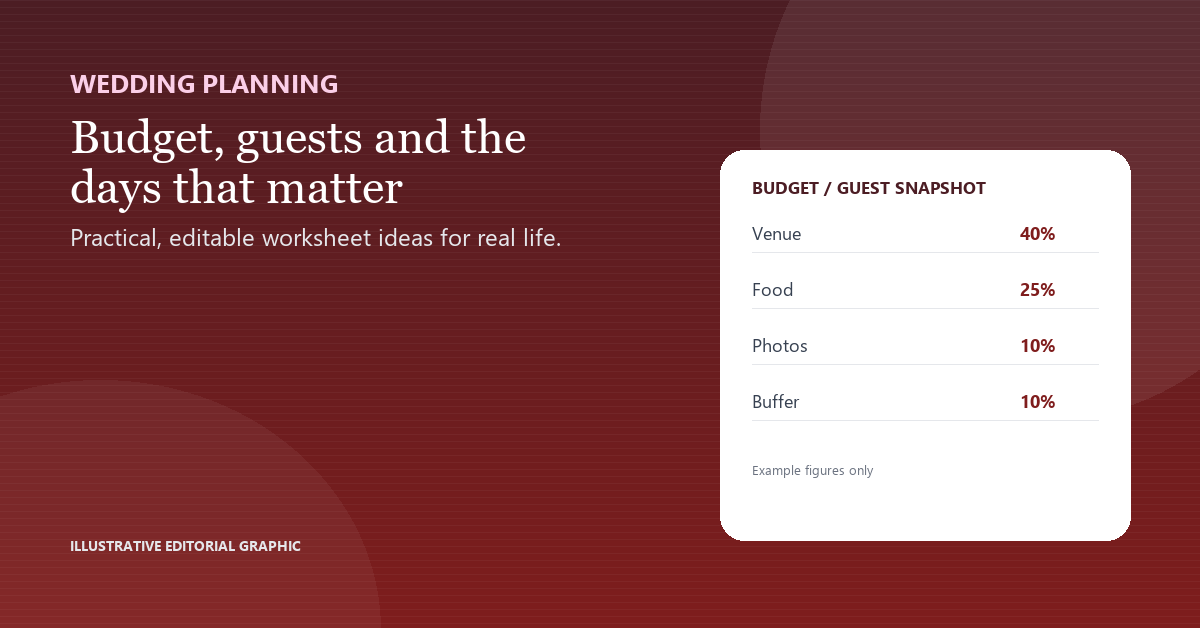
Most final-month stress is not caused by one big overspend. It comes from a series of small planning choices that were never connected to the total.
Mistake 1: choosing the venue first
A venue sets the minimum spend, guest capacity and date. Choosing it before the total makes every later category a reaction. Set the total and the guest range first.
Mistake 2: comparing headline prices
A quote without service charges, rentals or minimum food spend is not comparable. Ask for the total due and list what is included before you compare two venues.
Mistake 3: treating the buffer as spare money
The buffer is for changes, not upgrades. If it is spent before the final count, the plan has no room for a normal surprise.
Mistake 4: letting the guest count drift
Every additional guest changes food, seating and possibly the venue minimum. Update the connected lines in the same pass.
A quick repair
| Item | Example |
|---|---|
| Symptom | Small repair |
| Quotes are hard to compare | Use total-due columns |
| Guest count keeps moving | Set a final-count date |
| No room for surprises | Protect the buffer line |
What to watch for
- Planning from a venue upward instead of from the total.
- Using a deposit amount as if it were the full cost.
- Spending the buffer before the final guest count.
A useful next step
Choose one repair for the next planning session. A budget that reflects one real decision is more useful than a perfect spreadsheet that is never updated. If the total is already fixed, compare the next quote by its total due rather than its deposit. A deposit is a cash-flow number, not the cost of the wedding; mixing the two hides the decision you are actually making.