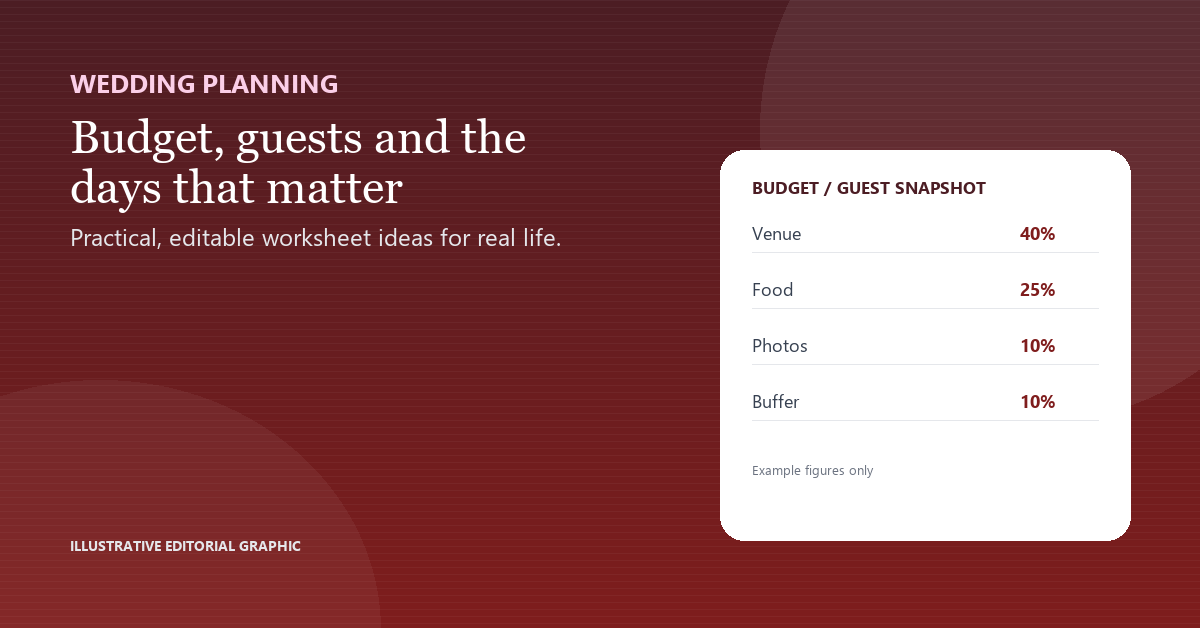
A guest list is not one number. It is a set of tiers, a food estimate and a seating plan that will change more than once. A workflow keeps those changes from becoming a last-minute emergency.
Build tiers before totals
Put must-have guests on the first tier, people you would love to include on the second and a back-up tier that only becomes real if the venue and budget allow it. This makes the cost of an invitation visible.
Connect the count to food and seating
Every ten guests change the catering estimate and may add a table. Update those numbers in the same pass as the guest count, rather than discovering the effect after the deposit is paid.
Keep one source of truth
Use one worksheet for names, tiers, contact status and seating notes. Duplicate lists on paper and in a phone are how people get invited twice or missed entirely.
Close the list deliberately
Set a date for final numbers, confirm the venue deadline and mark who is responsible for chasing replies. A list without a deadline is a permanent background task.
Guest tiers
| Item | Example |
|---|---|
| Tier 1 | Must-have guests |
| Tier 2 | Hopeful if space allows |
| Tier 3 | Back-up only |
| Final count | Venue deadline |
What to watch for
- Inviting from a list that has no cost connection.
- Waiting for every reply before checking the food estimate.
- Keeping separate paper and phone lists.
A useful next step
Review the tiers after each venue conversation. If the count grows, update food and seating before you add another name. If the venue seats eighty and your first tier is already seventy-eight, the next name is not a small addition—it changes the table plan and possibly the food minimum. Check the capacity line before adding anyone from the hopeful tier.