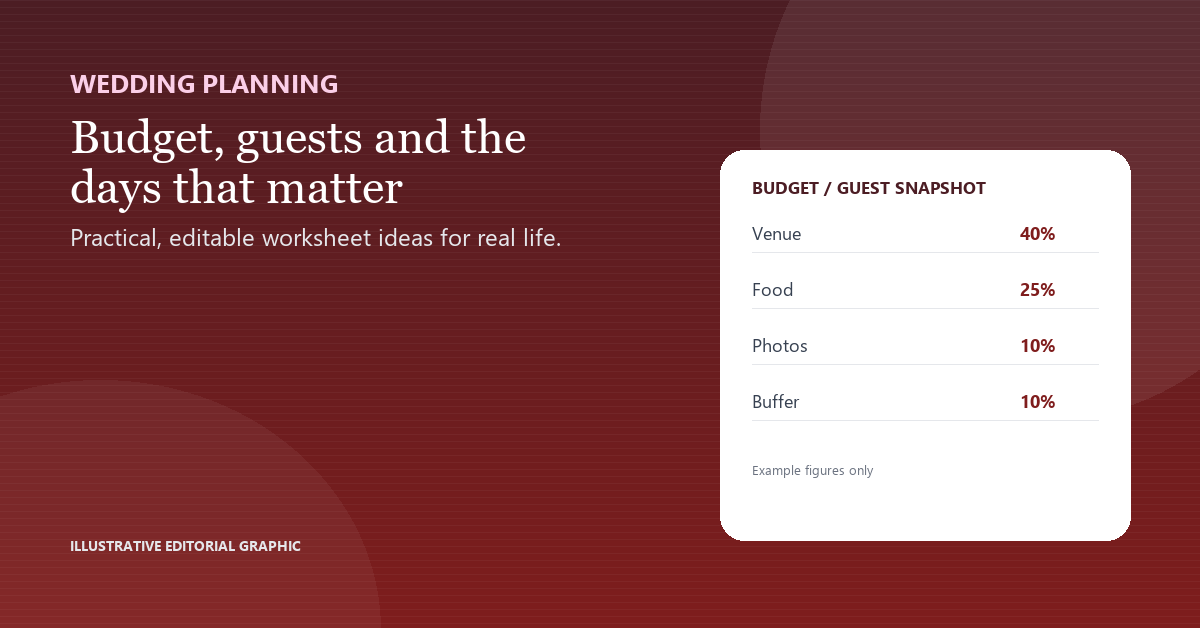
A wedding budget becomes useful when it helps you compare two real choices. Start with the total, then make the trade-offs visible before the quotes arrive.
Start with the total you can spend
Agree on the amount before browsing venues. A venue that is beautiful but pushes the total past the number you can comfortably spend is not a bargain. Write the total at the top of the worksheet and keep every later line connected to it.
Separate fixed from flexible
Fixed lines, such as a venue deposit or a legal fee, are hard to change. Flexible lines, such as flowers or stationery, are where trade-offs happen. Labelling them prevents a small flexible choice from quietly consuming the buffer.
Track actual quotes, not wishes
When a quote arrives, replace the estimate with the actual amount and note what it includes. A low headline price with missing service charges is not the same as a lower total.
Keep a contingency line
A buffer is not failure. It is the part of the plan that absorbs a late decision, a guest-count change or a price you did not expect.
Budget lines
| Item | Example |
|---|---|
| Venue | 30–40% of total |
| Food and drink | 20–30% |
| Photography | 8–12% |
| Buffer | 8–12% |
What to watch for
- Choosing a venue before setting the total.
- Comparing headline quotes without checking inclusions.
- Spending the buffer on upgrades before the final guest count is known.
A useful next step
Review the budget once a month and after every major quote. Change one line at a time and write down what the change bought you. If a venue quote includes a food minimum, add the minimum to the comparison even when you expect fewer guests. A quote that only works at full capacity is not a lower-cost option; it is a different guest-count commitment.